
- News
- City News
- delhi News
- NCR board plan to redefine Delhi's green cover may hamper conservation, worry experts
Trending
This story is from September 13, 2021
NCR board plan to redefine Delhi's green cover may hamper conservation, worry experts
With the NCR Planning Board (NCRPB) contemplating two categories for the existing Natural Conservation Zones (NCZ) — forests and green cover — experts feel areas that currently enjoy protection as forests will reduce in size. Under the proposal, while forests will remain protected, certain non-forest activities will be permitted in green-cover areas. The NCZ areas in Delhi include the Aravalis, which form a part of the Southern Ridge, lakes, riverbeds and water-recharge areas.
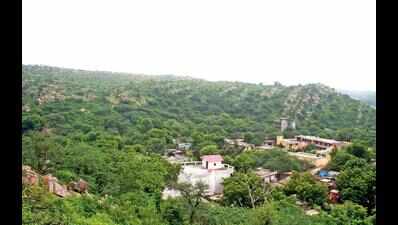
The forest cover in Delhi-NCR is less than 4% of the total land area

Vimlendu Jha, former independent member of the Ridge Management Board, said that forest cover in NCR was less than 4% of total land area and so the move to redefine forest and green cover zones would need to be thought through. “Once we ease the governance and legal protocols of conservation, it's going to be a free run. Conservation will be gravely hit,” he said. “We need to do more to protect ourselves from climate change, rapid urbanisation and the growing threat to public health due to deteriorating water and air quality. We mustn’t auction off our natural resources.
Jha noted that a green cover was as critical as a forest. “But even a forest remains undefined in some NCR states.” said Jha, apprehensive that the two-zone proposal could lead to people taking advantage of that ambiguity.
Environmental activist Diwan Singh, who launched a satyagraha to remove encroachments from the Yamuna floodplain in 2007, pointed out that even after the Supreme Court asked for the Ridge to be treated as a forest area in 1994, its extent was yet to be demarcated, leaving the forest open to exploitation. The grey area opened up by defining forest area differently from green cover is likely to lead to similar exploitation, Singh felt.
“If the protection for green area veered towards the strictness marked for forests, we would have appreciated it,” the eco-activist said. “But this isn’t the case here. In fact, it is the opposite. Such departures from strict conservation goals will harm the ecological balance of the NCR region.”
Yamuna activist Manoj Mishra expected Haryana to face the bigger impact since the Aravalis are yet to be declared a ‘forest area’. “The impact on the national capital will likely be far less,” he said. “But at the same time, it is inadvisable to loosen existing safeguards at a time when climate change is hitting cities hard.”
Some experts said they awaited further clarity, with the draft proposal yet to be cleared by the chief ministers of Delhi, Haryana, Uttar Pradesh and Rajasthan before final approval.
Forest officials also felt the definition of a green cover needed to be clarified before the impact could be ascertained. “There will certainly be some impact because forest areas enjoy tougher protection. Once we learn what a green cover constitutes, we will have a better idea,” said one of the officials.
Another forest official argued that there already are definitions of forest and green cover in the India State of Forest Report, released by the Forest Survey of India every two years. “If the same definition is accepted, forest cover in Delhi may not suffer,” the official said.
End of Article
FOLLOW US ON SOCIAL MEDIA








Hot Picks
TOP TRENDING
Trending Stories
In City
Entire Website
- Apple, Cisco, Microsoft and other tech giants are slashing jobs despite healthy revenues: Triggers behind the layoff culture, ways to safeguard your career and more
- 'Assigned task was not hers': Work pressure at EY Pune kills CA daughter from Kerala
- 'Stupid statement': Ex-Pakistan cricketer Basit Ali blasts Australian bowler for predicting 5-0 victory over India in Border-Gavaskar Trophy
- EXCLUSIVE | My sights are set on hitting the bullseye and changing the colour of medal at Los Angeles Olympics: Manu Bhaker
- Telangana to scrap 15-year-old vehicles from January 1
- What MS Dhoni said to Yuvraj Singh after he hit Stuart Broad for 6 sixes in 2007 T20 World Cup
- 'Attempt to polish your failed product': Nadda's response to Kharge's letter to PM Modi
- Pannun files civil lawsuit in US against GOI, Doval and others, seeks damages
- Atishi to take oath as Delhi chief minister on September 21, confirms AAP
- India gets ready for White Revolution 2.0 to strengthen its dairy sector, SOPs to be out tomorrow
- Tirupati laddu row: Lab reports confirm lard, tallow in ghee supplied to Tirumala
- 'Hope India ...': Pak reacts to Centre seeking review of Indus Water Treaty
- India beats China in yet another global benchmark
- 2 litres of black, bloody vape juice drained from woman's lungs in US
- MEA responds to 'misleading' reports of Indian weapons in Ukraine
- Israel's attacks on Lebanon 'a declaration of war': Hezbollah chief
- Did Chandrachud’s Ganpati puja with Modi cross the Laxman rekha?
- Accenture delays promotions globally, after denying salary hikes to employees in India
- As polls show Kamala edging ahead, desperate Trump digs deep into denialism, fantasy
- 'Who would be considered Mafia?': Akhilesh's swipe at CM Yogi

Popular Categories
Hot on the Web
Top Trends
Trending Topics
Diljit DosanjhsSalim KhanAbdu RozikKhatron Ke Khiladi 14Ocean WaterBigg Boss 18Tirupati Laddoo ControversyNandhan ReviewLebanon Pager BlastPitra Paksha 2024CheetahsKangana RanautAditi Rao HydariDalljiet KaurHoliday DestinationVikas SethiBest Selling Earbuds Under 1000Apple iPhone 16 ProVirat KohliWordle Answer
Living and entertainment
Latest News
Centre to examine EY India worker’s demiseWWE NXT Viewership Skyrockets on 9/17 following CM Punk's appearanceGoogle offers to sell part of its advertising technology business, but why European Union publishers are not happy with the proposal'Unwarranted, unsubstantiated': India reacts strongly to US court summons over pro-Khalistani terrorist Pannun's lawsuit over 'assassination bid'Shraddha Kapoor channels Sridevi's elegance in her latest photoshootKMAT 2024 admit card released at kmatindia.com, exam on Sept 22: Direct link to download hereFoods to include in the Monsoon diet according to AyurvedaDelhi housing society’s letter on ‘receiving too many parcels in a day’ goes viralThe man who wants to 'cancel' Adani from Sri LankaOn way to Gurgaon pub, 5 students suffer injuries after 'rented' car collides with railing at Delhi's Geeta Colony flyoverHC directs CBFC to decide on 'Emergency' certification by September 25: “You must have the courage to say this film cannot be released”OTET Answer Key 2024 released at bseodisha.ac.in, raise objections till Sept 28: Subject-wise direct links hereThalapathy Vijay’s GOAT is inching towards Rs 15 crore mark in HindiSalman Khan makes a dapper appearance at the Mumbai airportRavichandran Ashwin's sixth Test ton vs Bangladesh seals rare cricketing featBanks to play important role in making in Viksit Bharat : FM SitharamanSuch knocks will help me become strong and play in all conditions, says Yashasvi Jaiswal after making fiftyTelangana MSME policy: Focus on womenpreneurs, Rs 100 crore Yantram Fund for tech upgrade
Copyright © 2024 Bennett, Coleman & Co. Ltd. All rights reserved. For reprint rights: Times Syndication Service